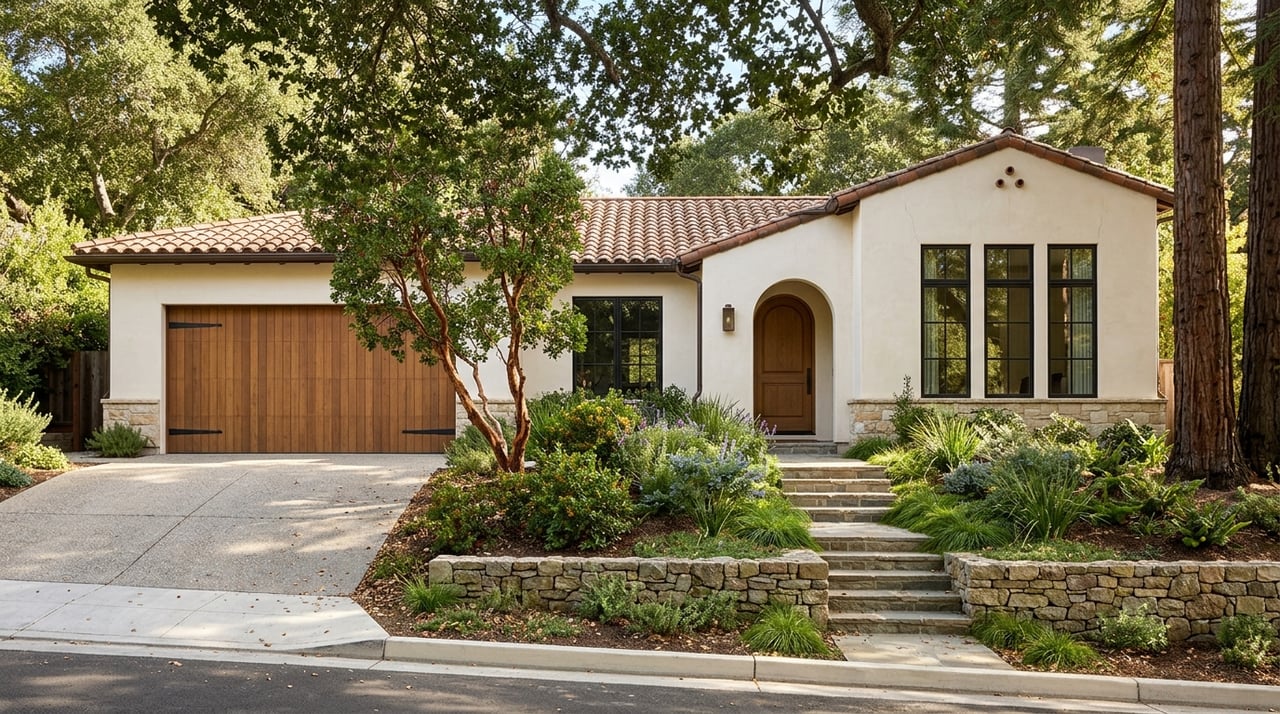
Relocating to Mill Valley From the East Bay
April 2, 2026
April 2, 2026
Thinking about trading your East Bay routine for redwood-lined streets, trail access, and a smaller-town feel? If Mill Valley is on your radar, you are not alone, but the move can feel less straightforward than it first appears. Between pricing, bridge logistics, neighborhood differences, and city-versus-county address quirks, there is a lot to sort through before you make a confident decision. This guide will help you understand what daily life and home shopping in Mill Valley really look like so you can compare it clearly to the East Bay. Let’s dive in.
For many East Bay buyers, Mill Valley offers a different kind of Bay Area lifestyle. It is compact, highly residential, and strongly connected to outdoor recreation, while still keeping a recognizable downtown core. That mix can feel very different from larger suburban patterns in Contra Costa County.
The numbers help explain the shift. Mill Valley has about 13,904 residents across 4.78 square miles, and the city’s owner-occupied housing rate is 66.2%, according to U.S. Census QuickFacts for Mill Valley. Marin County as a whole is also less dense and significantly more expensive than Contra Costa County, based on county census data. If you are moving from Lafayette, Walnut Creek, Orinda, or nearby East Bay communities, Mill Valley will often feel more premium-priced, more topographically varied, and more trail-oriented.
Mill Valley pricing remains elevated by any Bay Area standard. Zillow’s home value data placed the typical home value at $1,960,429 as of January 31, 2026. The same source aligns with census data showing a median owner-occupied home value above $2,000,000 for 2020 through 2024.
The practical takeaway is simple: if you are moving from many parts of the East Bay, you may be paying more for location, setting, and access rather than just square footage. In Mill Valley, lot shape, hillside position, walkability, and proximity to trails or downtown can all affect value in a big way.
If you are used to more uniform subdivision layouts in parts of Contra Costa County, Mill Valley may feel much less predictable from block to block. The city’s general plan land use framework says the housing stock is primarily single-family detached homes, with multi-family housing clustered near commercial areas or arterial streets.
That same plan shows how much the terrain shapes the housing experience. Some areas have relatively level streets and more conventional lot patterns, while others are steeper, lower-density, and closely tied to canyon or hillside conditions. In other words, you are often choosing between easier access and walkability on one hand, or more privacy and topographic character on the other.
Mill Valley is compact, but the day-to-day feel can vary more than many East Bay buyers expect. The city identifies neighborhood areas including Almonte, Homestead, Strawberry, Blithedale Canyon, Warner Canyon/Cascade Canyon/Kite Hill, Downtown, Scott Valley/Alto, Sycamore/Tamalpais Park, and Miller/Molino/Bayfront/Enchanted Knolls/Shelter Ridge in its general plan.
A few patterns stand out when you begin narrowing your search.
Downtown Mill Valley includes cottages, apartments, condominiums, and single-family homes around the commercial core. The city notes that proximity to parks, schools, the Downtown Plaza, churches, and shops contributes to a notably walkable small-town feel. If you want easier access to errands, dining, and community activity, this is often where buyers start.
The general plan describes Sycamore/Tamalpais Park as relatively level with a more conventional lot pattern. For East Bay buyers who want less slope and easier everyday circulation, these areas can feel more familiar. That can matter if you prioritize straightforward parking, shorter walking routes, or a simpler home-access experience.
Areas such as Cascade Canyon and other hillside neighborhoods often bring more topographic variation. In many of these locations, buyers may gain privacy, greenery, and closer trail adjacency, but daily movement can feel less convenient than in flatter sections. This is where lifestyle fit becomes just as important as price.
Even within a small city, values vary meaningfully. Zillow neighborhood value data shows a broad spread, including approximately:
For you as a buyer, that spread is useful because it shows how much slope, street pattern, and access to the commercial core can influence both pricing and daily life. A lower entry point may come with a different commute pattern, terrain, or home style than you first expected.
This is one of the biggest adjustment points for East Bay buyers. Mill Valley works well for many people, but it does not function like a simple rail-based East Bay commute.
For San Francisco access, the Golden Gate Bridge is the main link, with U.S. 101 and State Route 1 meeting at the bridge’s north side. Golden Gate Transit Route 114 provides a direct commuter connection between Mill Valley and San Francisco’s Financial District.
For local movement within southern Marin, Marin Transit Route 17 connects Downtown San Rafael to Sausalito via Mill Valley and serves stops including Mill Valley Depot, E Blithedale, Tam Junction, and Manzanita Park & Ride. That matters if you are thinking beyond a pure drive-everywhere routine.
For East Bay access, most trips involve the Richmond-San Rafael Bridge corridor plus a local connector. Golden Gate Transit Route 580/580X runs between Del Norte BART Station and San Rafael, but this is not the same as a one-seat BART commute. Caltrans also notes active open-road tolling work on the bridge through early 2027, which means travel conditions can remain a moving target.
If school assignment matters to your move, verify everything by exact property address. This is especially important in Mill Valley because some mailing addresses that say Mill Valley are actually in unincorporated Marin County.
The city notes that areas including Strawberry, Tam Valley, Homestead, Almonte, and Alto may carry Mill Valley mailing addresses while falling outside city limits. That can affect jurisdiction and should always be confirmed directly through the address itself, not just the mailing label.
Mill Valley School District serves grades K through 8 and includes five elementary schools plus Mill Valley Middle School, according to the district website. For high school, the Tamalpais Union High School District lists Mill Valley 94941 under Tamalpais High, which is located on Miller Avenue in Mill Valley. Because mailing address and jurisdiction do not always align, confirm both district and attendance details before you write an offer.
For many buyers, this is where Mill Valley really separates itself from the East Bay. Outdoor access is not just a bonus here. It is a defining part of how the area functions day to day.
Mount Tamalpais State Park spans 6,300 acres and rises to a 2,571-foot peak, giving residents close access to trail systems and scenic recreation. Muir Woods National Monument is located at 1 Muir Woods Rd in Mill Valley and is open daily from 8 a.m. until sunset, with parking or shuttle reservations required.
Mill Valley also has deep local outdoor traditions. The Dipsea Race begins downtown and follows the historic Dipsea Trail to Stinson Beach, while Bay Area Ridge Trail improvements on the Easy Grade connection are intended to improve bicycle access on Mount Tam. If your ideal weekend includes hiking, running, or spending more time outside without a long drive, Mill Valley has a strong case.
Before you decide Mill Valley is the right fit, it helps to narrow your priorities early. A few questions can make your home search much more efficient:
These questions matter because Mill Valley is rarely a plug-and-play swap for the East Bay. It is a lifestyle move, and the best fit usually comes from matching your daily habits to the right micro-location.
The smartest Mill Valley relocations usually start with clarity, not urgency. If you are coming from the East Bay, compare neighborhoods based on commute pattern, street layout, terrain, and how you actually want to spend a normal Tuesday, not just a beautiful Sunday afternoon.
It also helps to stay realistic about value. In a market where pricing remains high and neighborhood differences are meaningful, your best outcome often comes from understanding tradeoffs early. When you know whether you want flatter access, a more walkable setting, or stronger trail proximity, your search becomes much more focused.
If you are weighing a move from Lamorinda or the broader East Bay and want a practical, data-backed perspective, Wirlybirds INC can help you evaluate the move with a clear eye on lifestyle, property value, and the tradeoffs that come with crossing the bridge.
Stay up to date on the latest real estate trends.




We'd love to hear from you! Whether you're buying, selling, or just exploring your options, we're here to provide answers, insights, and the support you need. Contact us and start planning your next move.