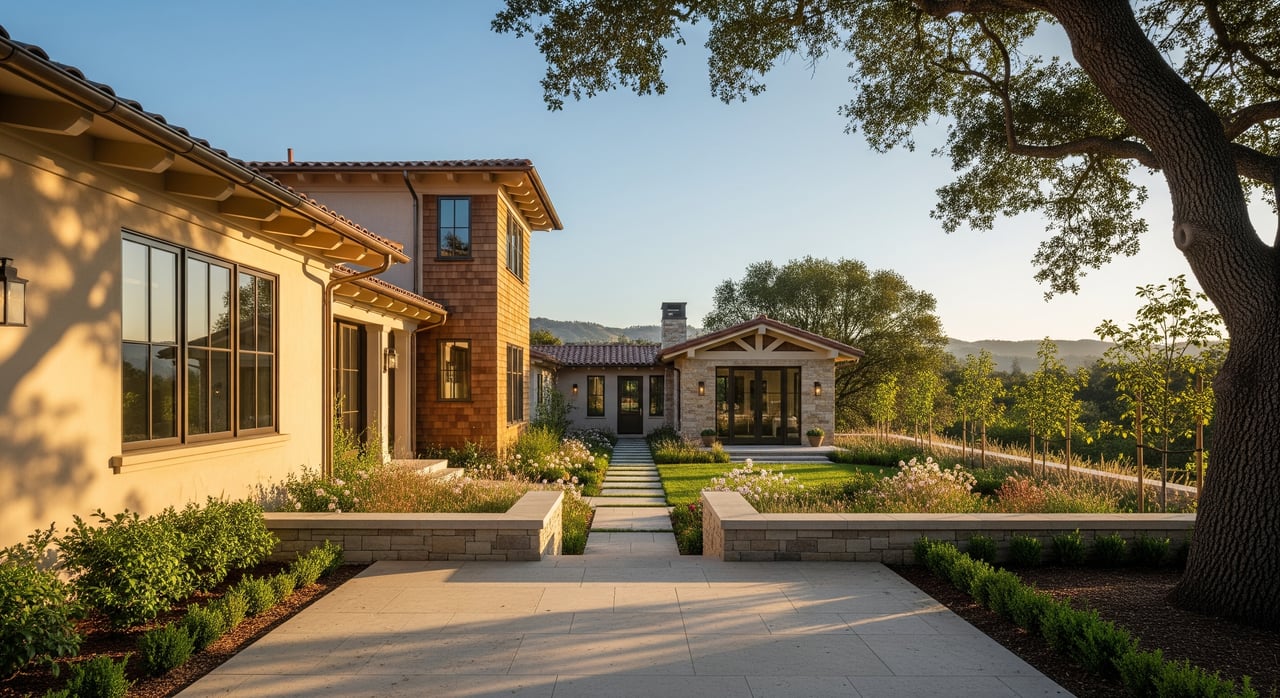
California SB 9 Guide for Alamo Homeowners
January 8, 2026
January 8, 2026
Thinking about splitting your Alamo lot or adding a second unit to create more value or flexibility? California’s SB 9 opened a new path for many single-family properties, and Alamo homeowners are asking what is actually possible on hillside parcels with unique utility and access needs. You want a clear, local answer before you invest time or money. In this guide, you’ll learn what SB 9 allows, how Contra Costa County applies the rules in unincorporated Alamo, and the practical steps to move from idea to approval. Let’s dive in.
SB 9 creates a ministerial process for two things on qualifying single-family parcels: an urban lot split and up to two residential units. Ministerial means no discretionary public hearing and only objective standards apply. Local agencies must use clear, measurable rules and cannot apply subjective design review to qualifying projects.
You can pursue a lot split, add up to two units on a qualifying lot, or both when local rules allow. In many cases, an owner can split a parcel and then build two units on one or both resulting lots. Each approval is processed ministerially if all objective standards are met, and your exact sequence and submittals depend on County procedures.
The state sets limits to prevent overuse or unsafe conditions. There is a one-time SB 9 split cap per original parcel. Parcels in certain protected areas or with recorded restrictions may be ineligible. SB 9 projects are typically ministerial and often outside discretionary CEQA review, but sensitive locations can change that outcome. For statutory details, review the California SB 9 bill text and the California Department of Housing and Community Development’s SB 9 guidance.
Alamo is unincorporated, so Contra Costa County Planning administers SB 9. Your parcel must be in a single-family zone that participates in SB 9. Parcels with recorded restrictions, conservation designations, or historic status can be excluded. Start by confirming your zoning, overlays, and any recorded covenants.
Much of Alamo sits on rolling or steep terrain. Slopes affect buildable area, grading, retaining walls, and stormwater management. Steep slopes can trigger geotechnical studies or hillside standards that may remove ministerial eligibility and shift the project to a discretionary track. Ask the County for a slope overlay check and whether any hillside development permit applies.
Each new lot must have legal access and meet emergency vehicle standards. Frontage, driveway width, turnarounds, and fire apparatus access are common pinch points, especially for flag or irregular lots. If a proposed parcel lacks legal access, the County can deny a lot split or require easements and documentation.
Serviceability can make or break a project. Many SB 9 approvals require letters or will-serve confirmations from your water and sewer district. If your property uses septic, County Environmental Health will require proof of feasible design, separation, and reserve areas for additional units or new lots. Some septic parcels cannot be split if standards cannot be met. Plan for potential main extensions, meter upgrades, impact fees, and utility easements.
Fire hazard, floodplain, creeks, wetlands, and protected trees all factor into site design. In Alamo, many parcels fall in moderate to very high fire hazard zones, which affect access, defensible space, sprinklers, and hydrant requirements. You can review statewide hazard designations through Cal Fire’s Fire Hazard Severity Zone resources. Creek setbacks or riparian rules can also limit where you build or whether a split is feasible.
A focused pre-application with Contra Costa County Planning is the best first step. Confirm zoning, overlays, driveway and frontage standards, and submittal requirements. Contact your water and sewer district and fire authority early to understand capacity, hydrant spacing, and fire flow. Clarify whether the County will require a geotechnical report or arborist review based on your slope and trees.
Counties often ask for a consistent set of materials for SB 9 lot splits and two-unit projects:
A simple ministerial SB 9 project can move in a few months if utilities are available and no hillside or septic issues are present. Pre-application and document prep often take 2 to 6 weeks. Initial completeness review commonly runs 2 to 4 weeks, followed by coordinated reviews for utilities, fire, and environmental health. If objective standards are met and no discretionary permits are triggered, the County can issue a ministerial approval. Parcel maps must be recorded before sale or further development.
Plan for design and professional reports first. On hillside parcels, you may need geotechnical studies, grading plans, and an arborist report. The biggest cost drivers are often utility connections, main extensions, driveway reconstruction for fire access, stormwater compliance, and potential fire-safety upgrades. Timeline and budget expand when septic feasibility is limited, slopes are steep, or a discretionary hillside permit is required.
Use this simple screen before you invest in full plans:
If your answers trend positive, schedule a pre-application with the County Planning Division.
SB 9 can unlock value in Alamo, but local slopes, utilities, fire access, and tree protections make the path highly site-specific. The right team will help you confirm eligibility, assemble the correct reports and letters, and submit a clean ministerial package that stays on timeline. If you want an integrated approach that pairs brokerage strategy with permitting and build execution, our family team can help from concept through construction and sale.
Ready to explore your options or get a quick eligibility screen for your parcel? Reach out to Woehrle Real Estate & Development for a local SB 9 consult.
Stay up to date on the latest real estate trends.

We'd love to hear from you! Whether you're buying, selling, or just exploring your options, we're here to provide answers, insights, and the support you need. Contact us and start planning your next move.